Where are solids interceptors most effective, and what types of facilities benefit from installing them?
Solids interceptors are designed for facilities that generate wastewater containing large amounts of suspended debris that could clog sewer infrastructure or damage downstream equipment.
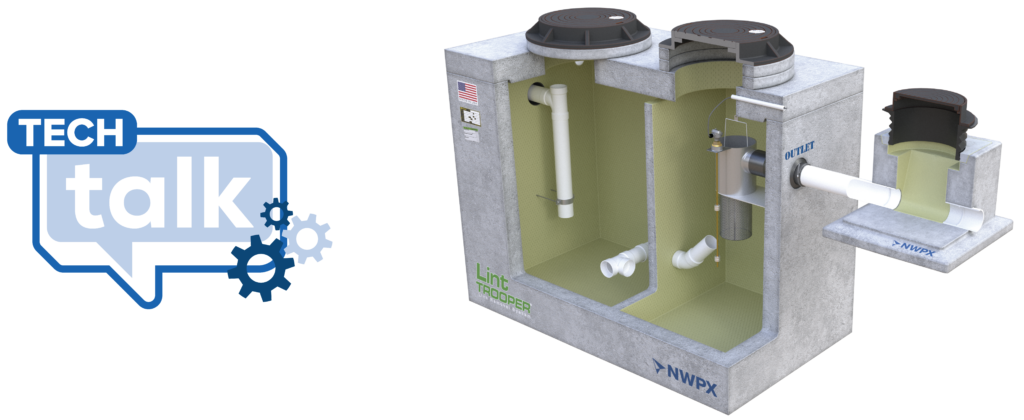
Industries such as food processing plants, breweries, wineries, and distilleries often produce organic solids that must be removed before discharge. Similarly, textile mills, laundromats, and dry cleaners generate high volumes of lint and fabric fibers that can accumulate in pipelines. Specialized systems such as the LintTrooper® are designed specifically for these high-fiber applications.
Other facilities produce less obvious but equally problematic solids. Recycling centers generate glass fragments and fibers, pulp and paper mills discharge wood fibers and pulp residue, and healthcare or dental facilities may produce plaster, textiles, or other debris that can obstruct sewer systems.
Solids interceptors are also effective in unique environmental settings such as veterinary clinics, zoos, aquariums, agricultural barns, and dog parks, where waste streams can include animal bedding, feed waste, gravel, and organic debris. Systems like the ZooTrooper® are engineered to capture these materials before they enter municipal sewer infrastructure.
By removing solids at the source, these interceptors help protect public sewer systems, reduce maintenance costs, and improve the reliability of wastewater treatment operations.