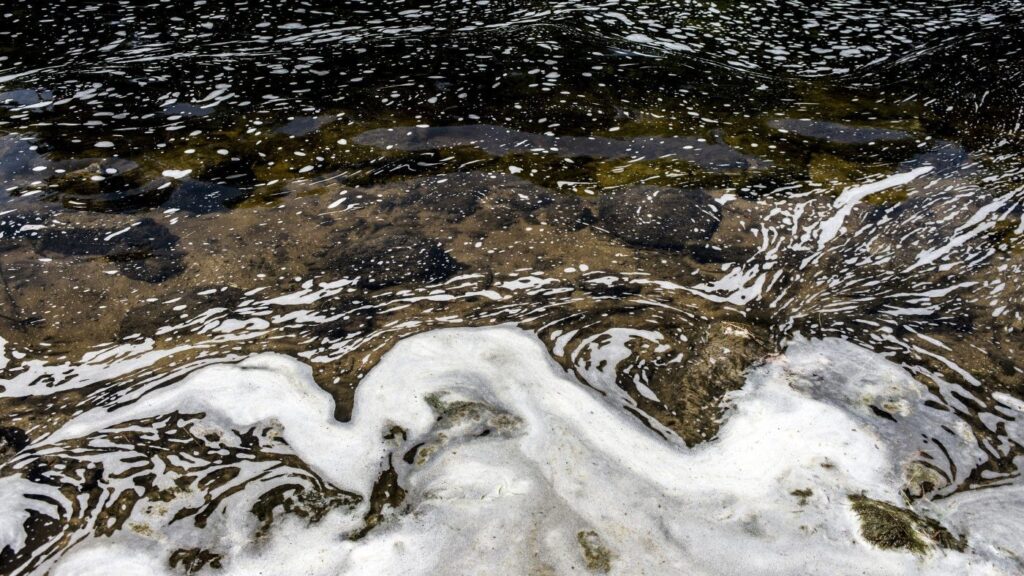

Water management in commercial and industrial environments is rarely as simple as installing a drain. In outdoor wash areas, fuel loading pads, aircraft hangars, retail service zones, and data center campuses, runoff can originate from two fundamentally different sources—routine rainfall and active wash operations. Each demands a different destination. Rainwater is typically required to discharge to storm systems, while wash water containing oils, detergents, fuel residues, and debris must be routed to sanitary sewer systems or containment for treatment. Improper flow routing is not just a design flaw—it is a compliance failure that can trigger regulatory violations, environmental damage, and operational shutdowns.
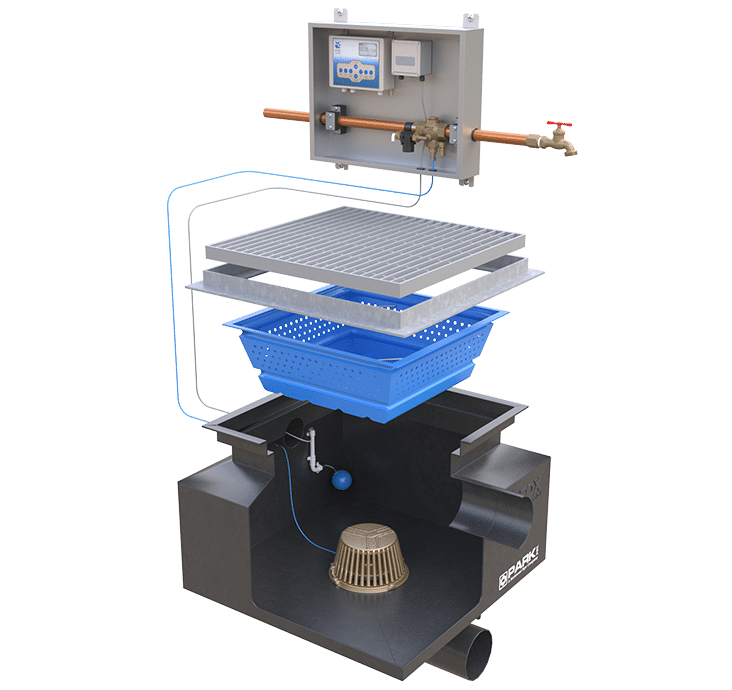
Diverter valves are engineered to resolve this conflict. Installed below grade within catch basins or vault structures, these systems automatically direct runoff to the appropriate discharge point based on operating conditions. Rather than relying on manual intervention, they create a multi-path hydraulic control point between storm, sanitary, and containment pathways. This transforms runoff management from a binary decision into a configurable routing strategy aligned with site-specific risks and regulatory requirements.
For engineers, municipalities, and facility owners, this capability transforms runoff management from a compliance vulnerability into a predictable, engineered solution.

Engineering Principles Behind Diversion Systems
At its core, a diverter valve functions as a multi-path hydraulic control point, transforming runoff management into a controlled routing system capable of directing flow between stormwater, sanitary, and containment pathways as conditions change.
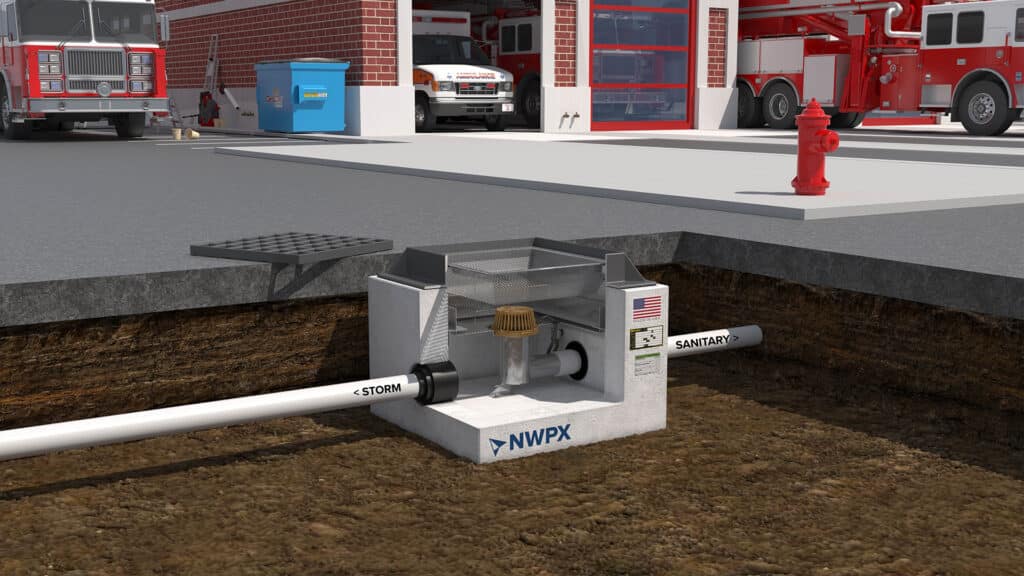
When wash operations begin, the system diverts that runoff to the sanitary sewer or a designated holding tank for treatment. This hydraulic control point ensures that rainwater does not overload wastewater treatment facilities, while contaminated wash water does not enter storm systems that discharge directly into rivers, lakes, or coastal waters.
Two primary system configurations are used, depending on site conditions and surface area: Demand-Driven and First Flush.
In smaller wash zones—generally 200 square feet or less—a demand-driven configuration is often sufficient. In this design, the system senses water flow in the supply line to a pressure washer or wash system. When flow exceeds a defined threshold, typically around half a gallon per minute, the valve automatically opens to divert runoff to sanitary treatment. Once washing stops, the valve returns to its default position directing water to storm. This approach requires no manual switching and avoids the operational risk associated with human error.
For larger paved areas, the first flush principle becomes critical. This configuration builds upon the same demand-driven activation but incorporates a PLC (Programmable Logic Controller)-controlled process to capture and treat the initial runoff volume. The “first flush” refers to the initial half-inch of rainfall over a surface area—the portion most likely to mobilize accumulated oils, hydrocarbons, and debris. Engineers calculate this volume based on site area, and the system then meters and releases runoff in controlled batches, repeatedly cycling the valve until the full volume has been diverted for treatment.
In many applications, these two approaches are integrated within a single system, providing continuous protection across both operational and environmental conditions while scaling from compact retail pads to large industrial sites and airport tarmacs.
Because these systems operate below grade in moisture-prone environments, reliability is essential. Many installations employ hydraulically actuated valves rather than fully electric motorized assemblies, reducing exposure-related maintenance concerns in subterranean vaults. The result is a largely maintenance-free solution designed for long-term service.
Configurations and Applications
Diversion systems are often viewed as simple two-path controls—directing flow between stormwater and sanitary systems. In practice, however, modern infrastructure requires more flexible routing. Based on site risk, regulatory requirements, and operating conditions, systems can be configured in several ways.
Three-way diversion (common configurations):
- Stormwater ↔ Sanitary Sewer
The most common configuration for washdown applications. Runoff flows to stormwater under normal conditions and is diverted to sanitary during wash events.
Applications: wash racks, dumpster/compactor areas, maintenance pads. - Sanitary Sewer ↔ Spill Containment
Used where storm discharge is not permitted. Runoff is directed to sanitary under normal conditions and to containment during spills or controlled events.
Applications: medical decontamination, hazardous wash areas, spill prevention. - Stormwater ↔ Spill Containment
Runoff is typically discharged to stormwater but diverted to containment during fueling or spill events.
Applications: fuel transfer areas, loading racks, aviation fueling or deicing.
Four-way diversion (advanced configurations):
- Stormwater ↔ Sanitary Sewer ↔ Spill Containment
These systems provide maximum flexibility, allowing runoff to be routed based on real-time conditions such as rainfall, wash activity, or emergency events.
Applications: medical decontamination facilities, high-risk industrial sites, critical infrastructure.
Expanding Applications Across Infrastructure Sectors
While wash racks are a natural application, diversion systems are increasingly being specified in a wider range of facility types. Dumpster and compactor areas represent one of the most overlooked runoff challenges. Liquids generated from solid waste accumulation often mix with rainwater and discharge directly to storm systems when left unmanaged. As regulatory awareness increases, some municipalities now require diversion or pretreatment systems in dumpster enclosures. What was once viewed as a housekeeping issue is now recognized as an environmental compliance concern.
Fuel loading and unloading zones present another critical use case. Facilities handling diesel, aviation fuel, or other hydrocarbons must comply with spill prevention and discharge regulations. In these environments, diversion systems route runoff either to storm drains during normal conditions or to containment tanks when fueling activities occur. Failure to implement compliant controls can expose operators to significant financial penalties and operational risk.
Aircraft hangars equipped with aqueous firefighting foam systems require similar diversion capabilities. During suppression events, foam discharge must be routed to holding tanks rather than municipal sewer lines. The same underlying valve technology can serve these specialized scenarios.
Emerging markets are also driving adoption. Data centers, for example, rely on large-scale cooling infrastructure that often requires periodic washdown. Municipalities increasingly prohibit untreated wash water from entering storm systems. In colder climates, frost depth considerations may necessitate deeper installations, insulated vault assemblies, or integrated heating elements. These projects demonstrate that diversion systems are not static catalog products but adaptable engineering platforms capable of responding to complex site constraints.
Structural Integration and Long-Term Durability
Installation flexibility is a significant advantage of modern diversion systems. In new construction, diverter valves can be integrated directly into precast concrete vaults, delivering a complete, traffic-rated structure ready for installation. Precast construction offers proven structural integrity, long service life, and resistance to deformation. Because many wash and fueling areas are located in parking lots or high traffic zones, vaults must withstand vehicular loading, from service trucks to aircraft support equipment.
Retrofit scenarios are also common. Systems can often be installed within existing catch basins, provided separate storm and sanitary connections are available. Coordination between civil and plumbing disciplines is typically required, particularly when adding pressurized supply lines for demand activation. However, once installed, these systems operate with minimal routine maintenance.

Within the portfolio of NWPX Park, a division of NWPX Infrastructure, diverter valves are incorporated into engineered, pre-plumbed precast systems rather than supplied as isolated components. These engineered systems may integrate separators, screening components, or additional treatment elements within a unified vault assembly. Delivering a factory-assembled system reduces field complexity, improves quality control, and ensures that the diversion mechanism performs as designed.
Customization is another factor critical to performance. Whether adapting to deep frost lines in northern climates, integrating filtration for marine facilities, or designing for heavy-load runway environments, diversion systems can be scaled and configured to meet project-specific demands. This ability to refine and recombine established technologies allows engineers to respond to evolving regulatory expectations without compromising durability.
Diversion as a Strategic Compliance Tool
Environmental regulations governing stormwater discharge and wastewater treatment continue to evolve. Municipalities and state agencies are placing greater emphasis on preventing contaminated runoff from entering natural waterways. As awareness increases around the environmental impact of uncontrolled discharge, diversion systems are shifting from optional enhancements to specified infrastructure elements.
For design engineers and facility owners, the benefits extend beyond avoiding fines. Proper diversion protects municipal treatment capacity, reduces pollutant discharge to receiving waters, and demonstrates proactive environmental stewardship. It also positions facilities to adapt to tightening discharge standards without costly retrofits in the future.
Runoff will always occur. The difference lies in whether it is directed intentionally or allowed to follow the path of least resistance. Diverter valves provide a controlled, engineered solution that aligns infrastructure performance with environmental responsibility, an outcome increasingly demanded by regulators, municipalities, and project stakeholders alike.